


A key snapping off inside a lock ranks among the most frustrating moments a homeowner or business owner can face. You reach for your door, turn the key, and suddenly you’re holding half of it while the other half sits stuck inside the cylinder. Your heart sinks, your schedule falls apart, and you start wondering whether you’ll need to break a window just to get inside.
Take a breath. This situation happens more often than you think, and it’s almost always fixable. At Astoria Locksmith and Door Inc., we handle broken-key emergencies every week across homes, offices, and vehicles, and we know exactly which steps work and which ones make the problem worse. This guide walks you through what to do first, how to safely remove a broken key, when to call in a professional, and how to prevent this frustrating scenario from happening again.
First Things First: What NOT to Do
Before you try anything, avoid these common mistakes. They feel instinctive, but they usually push the broken key deeper into the cylinder or damage the lock beyond a simple fix.
- Don’t force the lock. Twisting or yanking harder only jams the fragment further in and often snaps additional metal off.
- Don’t insert random tools without a plan. Jamming a screwdriver or knife into the keyway can scratch the pins and misalign the cylinder.
- Don’t panic and slam the door. Vibration can shift the broken piece into a spot that’s harder to reach.
Staying calm gives you the clearest path to a fast, damage-free solution.
Why Keys Break Inside Locks
Understanding the cause helps you prevent a repeat incident. Several factors typically lead to a snapped key:
- Metal fatigue. Keys wear down after years of use, and the metal becomes brittle over time.
- Forcing a stuck key. If a lock feels stiff and you push through it anyway, the key often takes the damage instead of the lock.
- Cold weather. Low temperatures make metal more brittle, so winter mornings see a spike in broken-key calls.
- A poorly cut or duplicate key. Cheap key blanks or inaccurate cuts create stress points that snap under normal pressure.
- A worn or damaged lock cylinder. Dirty or aging pins grip the key unevenly, which increases strain with every turn.
Once you know the root cause, you can address it directly instead of just treating the symptom.
Step-by-Step: How to Remove a Broken Key
If part of the key still sticks out of the lock, you can often remove it yourself with the right approach. Follow these steps carefully, and stop immediately if you feel resistance that shouldn’t be there.
Step 1: Assess how much of the key is exposed.
Look closely at the keyway. If a visible fragment sticks out, you have several safe extraction options. If the key snapped flush with the lock face, skip ahead to the professional-help section, since DIY tools won’t have anything to grip.
Step 2: Try tweezers or needle-nose pliers.
Grip the exposed piece firmly and pull straight out along the same angle the key entered. Avoid twisting, since that motion can break the fragment again or push it sideways.
Step 3: Use a broken key extractor tool.
This inexpensive, purpose-built tool slides beside the broken piece, hooks onto the grooves, and pulls the fragment out smoothly. Hardware stores sell these for just a few dollars, and they work far better than improvised tools.
Step 4: Try the super glue trick with caution.
Apply a small dab of super glue to a thin rod, such as a toothpick or matchstick, insert it carefully to touch the broken key, and hold it steady until the glue sets. Then, pull the rod straight out. Use this method only as a last resort, since misapplied glue can damage the lock’s internal pins.
Step 5: Use a coping saw blade for flush breaks.
If a tiny sliver of metal shows and a broken key extractor won’t grip it, a thin coping saw blade inserted alongside the fragment can sometimes catch enough of the ridges to pull it free.
Bonus tip: Lubricate the lock. Before and after extraction, apply a graphite-based or silicone lock lubricant. Avoid oil-based products like WD-40, since they attract dust and grime over time and can gum up the pins.
Special Situations That Need Extra Care
Not every broken key situation looks the same, and some require a different approach entirely.
Broken key in a car door or ignition. Vehicles combine mechanical and electrical components, so a broken key in the ignition can affect the steering column lock or immobilizer system. Forcing a fix here risks costly damage, so professional automotive locksmith service is almost always the safer route.
Broken key in a deadbolt vs. a padlock. Deadbolts have deeper cylinders, which sometimes make extraction trickier, while padlocks often allow easier access to the broken piece since the shackle can be maneuvered for a better angle.
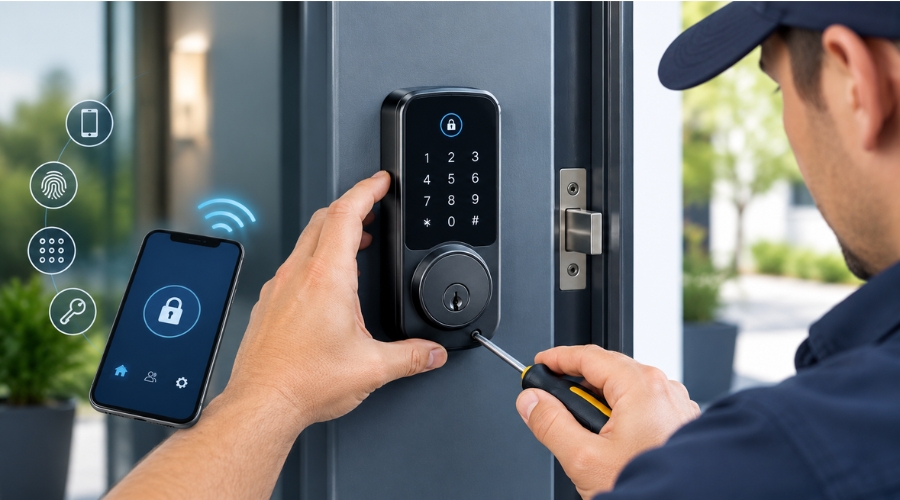
Broken key in a smart lock. Smart locks combine physical and digital security. A stuck key fragment can interfere with the electronic mechanism, so extraction requires extra caution to avoid damaging the motor or sensors.
When to Call a Locksmith Instead
DIY methods solve many broken-key situations, but certain signs mean you should stop and call a professional right away.
- The key broke flush with no exposed piece to grip.
- Your extraction attempts pushed the fragment deeper instead of freeing it.
- The lock is a high-security, electronic, or smart lock model.
- You’re dealing with a commercial property where downtime affects business operations.
- The lock shows visible damage after your attempts.
Astoria Locksmith and Door Inc. offers fast emergency locksmith response, so you won’t stay locked out for long. Our technicians carry specialized extraction tools that remove broken keys without damaging the surrounding hardware, and most jobs finish within a single visit.
After the Fix: Should You Replace the Lock or Just the Key?
Once the broken piece comes out, you’ll need to decide between cutting a new key or replacing the lock entirely.
- Get a new key cut if the lock still functions smoothly and shows no internal damage.
- Rekey the lock if you want added security without replacing the entire hardware, especially useful after moving into a new home.
- Replace the lock if the cylinder shows scratches, misalignment, or repeated jamming, since a damaged lock raises your risk of future breaks and security vulnerabilities.
A trained technician from Astoria Locksmith and Door Inc. can inspect your lock on-site and recommend the most cost-effective option based on the lock’s condition and your security needs.
How to Prevent This From Happening Again
A little maintenance goes a long way toward avoiding another broken-key emergency.
- Lubricate your locks every few months with a graphite or silicone-based product.
- Get replacement keys cut by a professional locksmith rather than a self-service hardware kiosk, since precise cuts reduce stress on the metal.
- Replace old, worn keys before they show visible bending or thinning.
- Never force a key that feels stiff; instead, schedule a lock cleaning or repair.
- Watch for early warning signs, such as a key that wiggles more than usual or requires extra pressure to turn.
Key Points About Your Key Breaks Inside the Lock
- Stay calm and avoid forcing the lock the moment a key breaks.
- Cold weather, metal fatigue, and forced turns cause most broken-key incidents.
- Tweezers and needle-nose pliers work well when part of the key still shows.
- A broken key extractor tool remains the safest and most reliable DIY method.
- The super glue trick works only as a careful last resort.
- Flush breaks almost always require professional extraction tools.
- Car ignitions and smart locks need specialized handling due to electronic components.
- Lubricating your lock before and after extraction prevents further jamming.
- A damaged lock cylinder often needs full replacement rather than just a new key.
- Routine lock maintenance and professionally cut keys prevent most future breaks.
FAQs: Your Key Breaks Inside the Lock
Who can fix a broken key stuck in a lock near me in Astoria, NY?
Astoria Locksmith and Door Inc. provides same-day emergency locksmith service throughout Astoria and the surrounding neighborhoods. Our technicians arrive with professional extraction tools, so you avoid the risks that come with DIY attempts on stubborn or flush breaks.
How much does it cost to remove a broken key from a lock?
Costs vary based on the lock type, the extraction difficulty, and whether you need a new key or a full lock replacement afterward. A simple extraction typically costs less than a full lock replacement, so calling early often saves money compared to waiting until the lock sustains further damage.
Can I still get into my house if my key breaks in the front door lock?
Yes, in many cases. If enough of the key sticks out, you may free it yourself with pliers or an extractor tool. If the break sits flush or your attempts fail, a locksmith can open the door through other safe entry methods without destroying the door or frame.
Is it safe to use super glue to remove a broken key?
It can work in a pinch, but you must apply the glue carefully to avoid getting it into the lock’s internal pins. If you’re unsure, it’s safer to call a professional locksmith rather than risk permanently damaging the cylinder.
Do I need a new lock after a key breaks inside it?
Not always. If the lock still turns smoothly and shows no internal scratching after the fragment comes out, a simple new key often solves the problem. A locksmith can inspect the lock and tell you definitively whether rekeying or full replacement makes more sense.
What should I do if my car key breaks in the ignition?
Avoid trying to force it out yourself, since vehicle ignitions connect to sensitive steering and immobilizer systems. Contact an automotive locksmith who specializes in vehicle extractions to prevent costly damage to your car’s electrical components.
How quickly can a locksmith respond to a broken key emergency?
Response times depend on your location and the time of day, but reputable local locksmiths, including Astoria Locksmith and Door Inc., prioritize emergency calls and typically arrive within a short window to minimize your downtime.
Final Thoughts
A broken key inside a lock feels like a crisis in the moment, but it rarely turns into a lasting problem when you handle it correctly. Start by staying calm, assess how much of the key remains exposed, and try a safe extraction method suited to your situation. When the break sits flush, involves a vehicle, or affects a smart lock, bring in a trained professional rather than risk further damage.
Astoria Locksmith and Door Inc. stands ready to help with residential, commercial, and automotive locksmith needs, including broken key extraction, lock installation and repair, master key systems, and emergency locksmith service. Whether you’re locked out at midnight or dealing with a stubborn deadbolt during a Monday morning rush, our team responds quickly and gets your lock working again without unnecessary damage or cost. Reach out to Astoria Locksmith and Door Inc. today, and let our experienced technicians turn a stressful lockout into a quick, hassle-free fix.