

Your front door lock works every single day, yet you probably ignore it until it fails. Unfortunately, small lock problems often grow into serious security risks. In Astoria, where apartments, row houses, and busy storefronts line the same streets, a weak lock invites trouble quickly. Therefore, you should learn the early warning signs that your home locks need repair or replacement, and act before a lockout or break-in forces your hand.
7 Signs: When To Repair Or Replace Your Home Locks?
At Astoria Locksmith and Door Inc., we see the same patterns again and again, and this guide walks you through the seven most common ones.
Sign 1: Your Key Sticks, Jams, or Turns with Difficulty
First, pay attention to how your key feels. A smooth lock turns with light pressure. When you need to wiggle, push, or force the key, the cylinder has a problem. Worn pins, trapped debris, rust, or a damaged cylinder usually cause this trouble.
Next, run a simple test. Try every key on your ring. If only one key struggles, that key has worn down. However, if every key sticks, the lock itself has failed. Cleaning and dry graphite lubrication sometimes solve minor cases. Still, repeated sticking means the internal parts have worn out, and replacement becomes the smarter choice. Avoid oil-based sprays, because they attract dust and gum up the pins over time.
Sign 2: Your Key Looks Bent, Worn, or Starts to Break
Keys and locks wear each other down. A key with smooth, rounded edges no longer lifts the pins correctly, while a worn pin set grinds the key further. As a result, the damage speeds up with each use.
Moreover, a weak key can snap inside the cylinder. That situation creates a lockout and often ruins the lock. To check the cause, cut a fresh copy and test it. If the new key also struggles, the lock needs repair or replacement. If the new key works smoothly, the old key simply retired. Either way, do not ignore a bent key.
Sign 3: The Lock or Handle Feels Loose
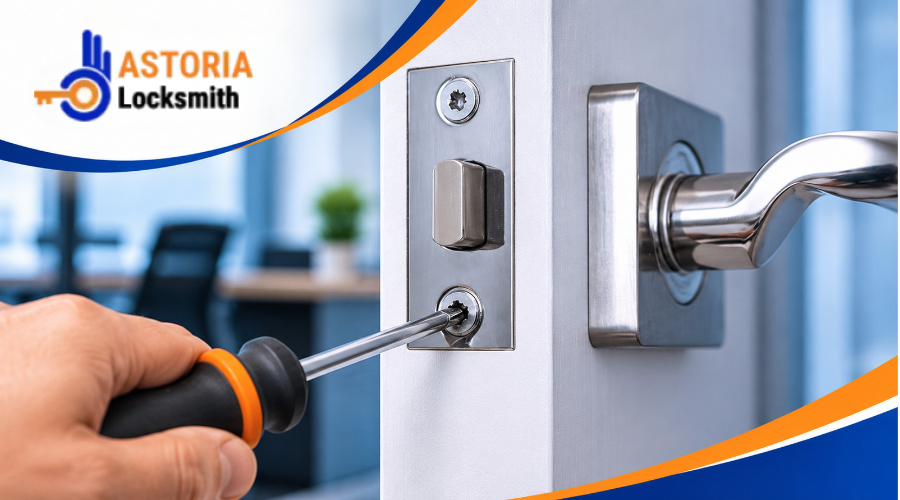
Grab your door handle and deadbolt, then give them a gentle shake. Solid hardware stays firm. Loose hardware, on the other hand, signals trouble. Sometimes a simple screw has backed out, and you can tighten it in a minute. In other cases, worn internal parts or a damaged strike plate cause the wobble.
This sign matters because loose hardware gives intruders an advantage. A burglar needs less force to defeat a lock that already moves. Consequently, you should tighten the screws first and test again. If the wobble returns, call a professional for lock installation and repair before the problem gets worse.
Sign 4: The Deadbolt Does Not Fully Extend or Retract
Your deadbolt should slide smoothly into the door frame every time. When it drags, stops short, or refuses to retract, something has gone wrong. Door misalignment often causes the problem. Seasonal humidity swells wood doors, and older Queens buildings settle over time, so the bolt no longer lines up with the strike plate.
Alternatively, the bolt mechanism itself may fail. Either way, a half-engaged deadbolt offers little protection, even though it may look secure. Therefore, never accept a “mostly locked” door. Adjust the alignment or replace the mechanism so the bolt travels its full distance.
Sign 5: You See Rust, Corrosion, or Visible Damage
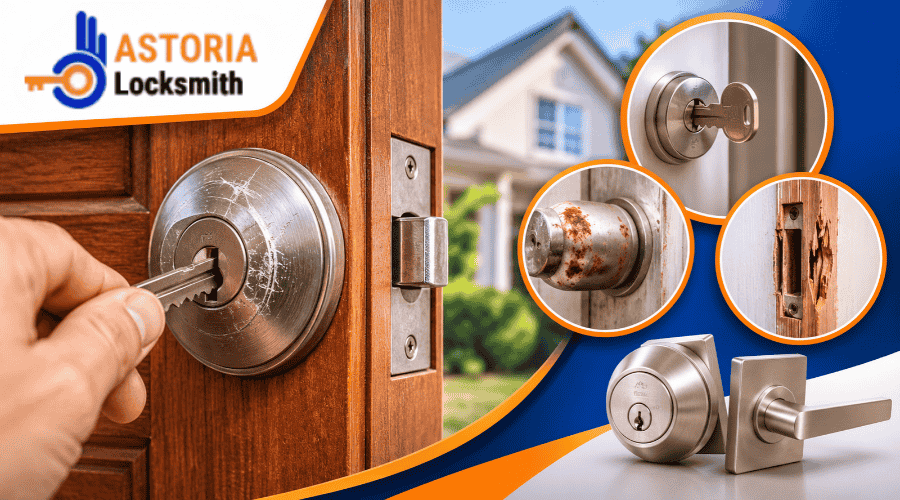
Take a close look at your exterior lock. Moisture, road salt, and city weather attack metal hardware year after year. Rust may start as a cosmetic issue, but it soon spreads into the cylinder and stiffens the moving parts.
In addition, check for cracks, dents, and deep scratches around the keyhole. These marks weaken the lock and the surrounding door. Furthermore, damaged hardware advertises weakness to anyone walking past. When corrosion reaches the internal components, replacement usually costs less than repeated repairs.
Sign 6: Your Locks Look Old or Outdated
Age quietly erodes security. Many residential locks last roughly seven to fifteen years, depending on quality and use. Builder-grade hardware often wears out faster than that. Meanwhile, older locks lack modern protections such as anti-pick pins, anti-bump designs, and reinforced bolts.
Consider the grade of your lock as well. ANSI Grade 1 and Grade 2 locks withstand far more force than basic Grade 3 hardware. If you cannot remember when anyone installed your locks, plan an upgrade. Our residential locksmith services cover everything from standard deadbolts to high-security and smart lock options.
Sign 7: You Experienced a Break-In, Attempted Break-In, or Lost Keys
Finally, treat any security incident as an immediate trigger. Fresh scratches, gouges, or a lock that suddenly feels different may indicate a tampering attempt. Likewise, lost keys leave you guessing who holds access to your home.
The same rule applies after you move into a new place. Previous owners, tenants, contractors, and relatives may still carry working keys. Therefore, rekey or replace your locks right away. Rekeying changes the internal pins so old keys stop working, and it often costs less than full replacement. Business owners face the same risk, so shop and office tenants should explore our commercial locksmith services after any incident.
Repair or Replace? A Quick Decision Guide
Many homeowners struggle with this choice, so use these guidelines:
- Repair the lock when the problem stays minor and isolated, such as a loose screw, light debris, or a slightly misaligned strike plate.
- Rekey the lock when the hardware works well but you need to cancel old keys.
- Replace the lock when it has aged, fails repeatedly, shows rust damage, or no longer meets your security needs.
In short, repair solves small problems, while replacement solves security problems. When you feel unsure, ask a professional to inspect the lock before you spend money.
What to Do Next
Start by stopping any forceful attempts to turn a stubborn key. Forcing it often snaps the key or breaks the cylinder. Then, secure your door temporarily with a chain or door brace if the lock no longer closes properly. After that, review the signs above and note which ones apply.
Next, explore our full list of services and check the price list so you know what to expect. The team at Astoria Locksmith and Door Inc. inspects locks, explains your options plainly, and completes repairs or replacements without pressure. Do not wait for a lockout, because emergency calls cost more and always arrive at the worst time.
Key Points: About Home Locks Need Repair Or Replacement
- Sticking or jamming keys signal internal wear.
- Bent or worn keys damage the lock and eventually break inside it.
- Loose or wobbly hardware makes forced entry easier.
- A deadbolt that fails to extend fully gives you a false sense of security.
- Rust and corrosion weaken both the lock and the door around it.
- Old locks lack the protection that modern designs provide.
- A break-in, an attempted break-in, or lost keys demand immediate action.
- Repair fits minor, isolated problems.
- Replacement fits age, repeated failure, and security concerns.
- Quick action prevents expensive emergency lockouts.
FAQs: About Home Locks Need Repair Or Replacement
How often should Astoria homeowners replace their door locks?
Most homeowners should replace locks every seven to fifteen years, although the exact timing depends on quality and use. Front doors in busy Astoria buildings take more daily wear, so they often wear out sooner. In addition, replace your locks immediately after a break-in, a move, or a lost key. Regular inspections help you catch problems early, and a local locksmith can tell you whether your hardware has time left.
Is it cheaper to repair or replace a deadbolt in Queens?
Repair usually costs less when the problem stays minor, such as a misaligned bolt or a loose fastener. However, repeated repairs on an old or corroded deadbolt add up quickly, and replacement then saves money. Prices vary by lock type, grade, and the time of the visit. Therefore, check our price list first, then request a quote for your specific lock.
Can a locksmith fix my lock without replacing it?
Yes, a skilled locksmith often repairs a lock without replacing it. Technicians clean cylinders, swap worn pins, realign strike plates, and tighten loose hardware on site. Nevertheless, a damaged or outdated lock sometimes does not justify repair. In those cases, the locksmith will explain why replacement protects you better.
Do I need to replace every lock if only one fails?
Not necessarily. You can replace the failing lock alone and keep the rest. However, mismatched locks mean you carry several different keys. If you want one key for every door, ask your locksmith to rekey or replace all locks together. This approach also upgrades your whole security setup at once.
Who offers reliable lock repair near me in Astoria, NY?
Look for a licensed local locksmith with clear pricing, fast response times, and real customer reviews. You can read feedback about Astoria Locksmith and Door Inc. on Yelp, and you can find our location on Google Maps. Local reviews show you how a company treats real neighbors, so read them before you book.
What should I do if my lock fails late at night in Astoria?
First, stay calm and avoid forcing the key. Next, move to a safe place and call a local emergency locksmith. Explain the problem clearly so the technician can bring the right tools. Meanwhile, secure any open entry point with whatever means you have. Afterward, schedule a full inspection so the same problem does not return.
Final Thoughts
Your locks protect your family, your belongings, and your peace of mind. Consequently, every warning sign deserves attention. Sticking keys, loose hardware, rusty cylinders, and aging bolts all tell the same story: your door needs help. Act early, and you will avoid lockouts, expensive emergencies, and security gaps.
Ready to check your locks? Visit Astoria Locksmith and Door Inc. or contact our team today to schedule an inspection or request a quote. We serve Astoria and the surrounding Queens neighborhoods, and we will help you decide between repair and replacement with honest, clear advice.